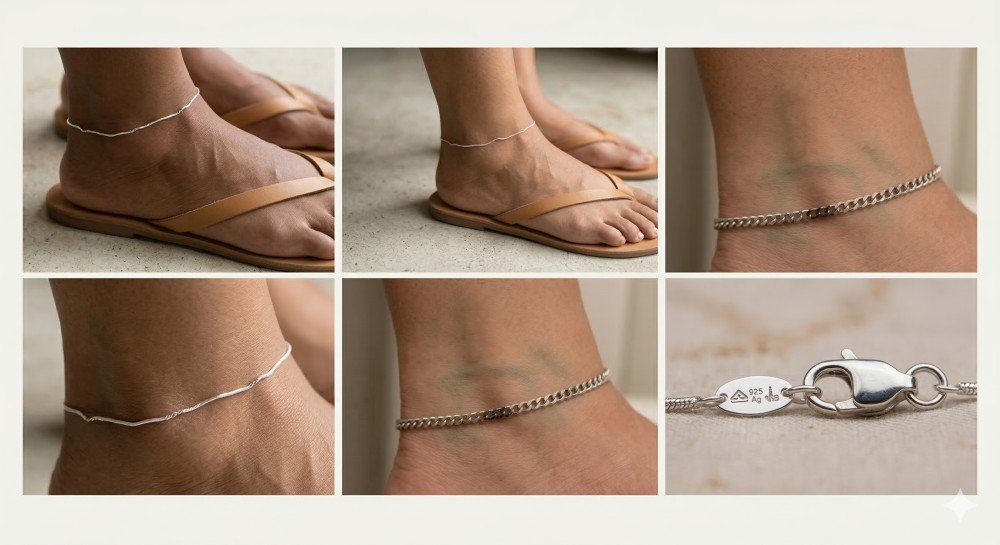
The difference between 800 and 925 silver lies in purity, durability, and value, with 925 sterling silver preferred for modern jewellery.
12th Mar 2026     Anklets

925 vs 999 vs 800 Silver Anklets — Which Purity Should You Actually Buy for Daily Wear in India?

If you’ve ever tried buying a silver anklet online, you’ve probably seen numbers like 999925, or 800 stamped in the description — and almost every brand says, “92.5 is best for jewellery” without explaining why. Many buyers still wonder:

  • Is 999 “purer” and therefore better?
  • Why do almost all serious jewellery brands push 925?
  • What even is 800 silver, and why is it cheaper?

This guide breaks the whole topic down in simple, practical language so you can choose the right purity for daily-wear anklets in Indian conditions — humidity, sweat, commuting, and all.

We’ll compare 999 vs 925 vs 800 silver, look at real-life issues like bending, scratches, blackening, and skin marks, and show why Ross Jewells uses only 92.5 BIS hallmarked silver for its anklets and other jewellery.\
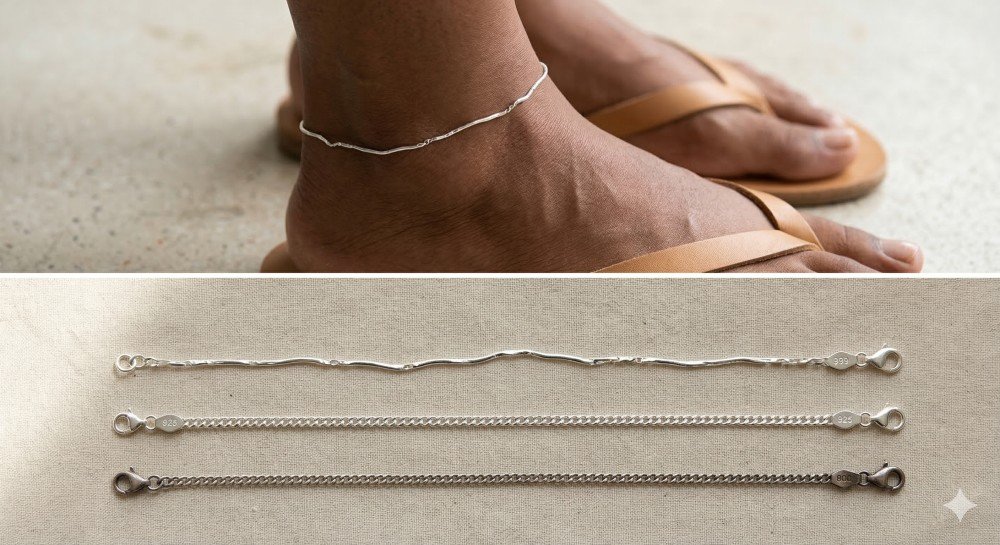
Three silver anklets side by side labeled 999, 925, and 800, showing differences in shape, shine, and tarnish on a neutral fabric background

1. What Do 999, 925 and 800 Actually Mean?

Think of silver purity like the percentage of real silver vs supporting metals (alloys) in the piece.

  • 999 silver (often written as 99.9 or “fine silver”)
    • About 99.9% pure silver
    • Almost no other metal, extremely soft and malleable
    • Mostly used for coins, bars, idols, and investment pieces, not daily jewellery
  • 925 silver (Sterling Silver)
    • 92.5% pure silver + 7.5% other metals (usually copper)
    • Harder, more durable, still bright and shiny
    • Standard choice globally for rings, anklets, bracelets, chains, earrings
  • 800 silver
    • 80% silver + 20% other metals
    • Much cheaper to produce, noticeably less pure
    • Found more in budget or unbranded silverware and ornaments, not premium jewellery

In short:

  • Higher number = more pure silver, but not automatically better for daily wear.
  • Jewellery needs strength + shape stability, not just purity.

2. Why 999 Silver Anklets Are Too Soft for Real Life

On paper, 999 sounds perfect — “pure silver”. In reality, it’s too soft for something like an anklet.

Independent jewellery guides and Indian brands that educate customers on purity all say the same thing: 999 is great for coins and bars, not daily-wear jewellery.

2.1 Soft metal = bends, dents and misshapen anklets

Because 999 silver is almost pure, it’s:

  • Easier to scratch and dent
  • Easier to bend out of shape
  • Less able to survive the rough life of an anklet — walking, stairs, shoes, office floors, metro, bike rides

A 999 anklet might look stunning when brand-new. But after a few weeks of actual Indian daily use, you can see:

  • Kinks in the chain
  • Misshapen links
  • Loose joints around charms or bells
  • Uneven circle if it’s a solid band

Jewellery experts summarise this simply:

999 is purer, but too soft for intricate or weight-bearing jewellery that’s worn every day.

2.2 More scratches = dull look faster

Soft metal means the surface marks easily. Even if 999 tarnishes slightly slower, the constant micro-scratches and dents from walking and shoes quickly make it look older than a good 925 piece.

For an anklet that lives close to the ground, dust, and footwear, that’s a big no.
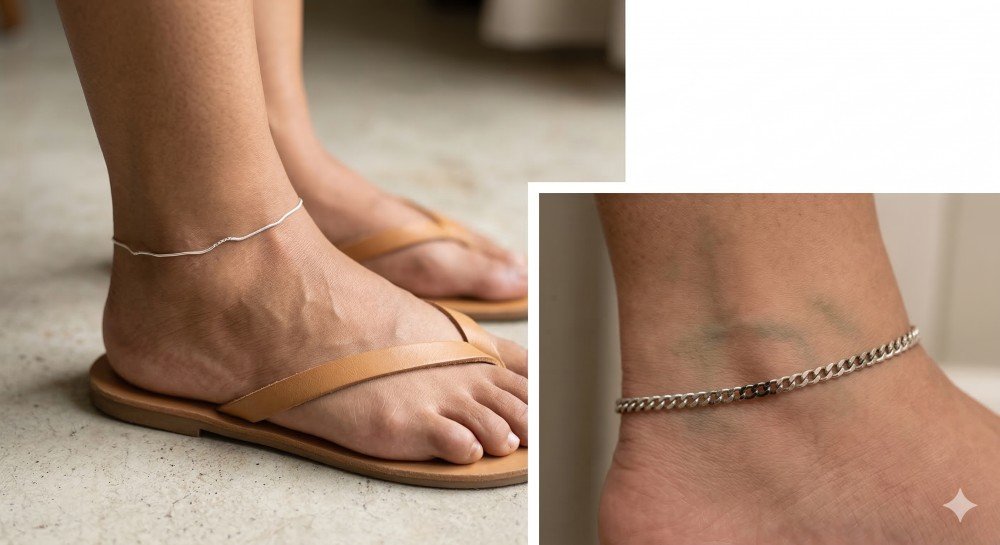
Three silver anklets side by side labeled 999, 925, and 800, showing differences in shape, shine, and tarnish on a neutral fabric background.

3. The Hidden Problems with 800 Silver in Indian Humidity

At the other end of the spectrum is 800 silver — less pure, more mixed metal.

Because it has only 80% silver and more alloy, you get:

  • Cheaper material
  • Higher hardness, but
  • More reactivity with skin, sweat and air

3.1 Why 800 silver turns skin green faster

Most of that extra 20% alloy is usually copper or similar metals. Chemistry and jewellery education sources agree that copper is the main reason jewellery leaves green marks on your skin.

When your feet sweat (which they do a lot, especially in Indian summers), the moisture and salts react with the copper in the alloy:

  • Copper oxidises
  • This creates copper salts and tarnish
  • Those rub off on your skin as green or grey marks

Sterling silver (925) already has some copper and can sometimes cause mild tarnish in very humid or sweaty conditions. Now, imagine:

  • 800 silver = even more copper, more reaction, more discolouration
  • Anklets = maximum sweat and dust contact

So an 800 silver anklet in India often:

  • Turns black or green faster
  • Leaves more skin marks
  • Needs more frequent cleaning and polishing

3.2 Looks “less premium” over time

Even if an 800 piece looks shiny at first, with regular wear it can:

  • Lose its bright white tone
  • Start looking more yellowish or dull
  • Need more polishing to maintain shine

For premium, giftable jewellery, that isn’t ideal at all.


4. Why 92.5 (925 Sterling Silver) Is the Sweet Spot for Anklets

This is where 92.5% silver + 7.5% alloy hits the perfect balance between:

  • Purity (almost all real silver)
  • Strength (doesn’t bend or deform easily)
  • Shine (still bright, white, and reflective)
  • Comfort & skin-friendliness

Jewellery brands, educational blogs, and even big players like Tanishq all recommend 925 for daily-wear silver jewellery because it’s harder and more durable while still visibly looking like high-quality silver.

4.1 Strong enough for daily Indian use

Compared to 999, 925 is:

  • Harder and stronger thanks to its small alloy content
  • Better at holding fine shapes and thin chains
  • More resistant to everyday knocks, shoe contact, and stairs

That’s exactly what you need in an anklet that will be:

  • Worn to office, markets, cafes
  • Brushed by sandals and sneakers
  • Exposed to heat, sweat, roads, and indoors

4.2 Still bright, still beautiful

In real life, the visual difference between 925 and 999 to the naked eye is tiny:

  • 999 is slightly more white and bright, but extremely soft
  • 925 is slightly less bright, but still very shiny and polished-looking

Anklets from 92.5 silver still:

  • Reflect light beautifully
  • Look premium and polished
  • Work perfectly for both ethnic outfits and Western wear

4.3 Tarnish is normal, but manageable

All real silver tarnishes over time — even pure 999. With 925:

  • Tarnish can appear a bit faster than 999 because of the copper content
  • But it’s easy to clean with polishing cloths or home methods
  • Proper storage and care easily maintain shine for years

For a daily-wear anklet, the practical trade-off is worth it:

Slightly more maintenance than 999, but far stronger, longer lasting, and safer than 800.


5. How to Read and Verify BIS Hallmarks on Silver Anklets

In India, the Bureau of Indian Standards (BIS) regulates hallmarking for precious metals. BIS hallmarking for silver is being tightened and rolled out in phases, and experts note that silver jewellery hallmarking is becoming mandatory, similar to gold.

5.1 What a proper BIS hallmark includes

A complete BIS hallmark on silver jewellery has four main parts.
  1. BIS logo
    • Official triangular mark of the Bureau of Indian Standards
    • Shows that the piece has been tested at an authorised centre
  2. Purity grade (e.g., 925)
    • “925” = 92.5% pure silver, i.e., sterling silver
    • “999” = 99.9% pure silver
  3. Assaying Centre code
    • Unique identifier of the BIS-recognised testing laboratory
  4. Jeweller’s ID / HUID
    • Unique code for the jeweller or manufacturer registered with BIS
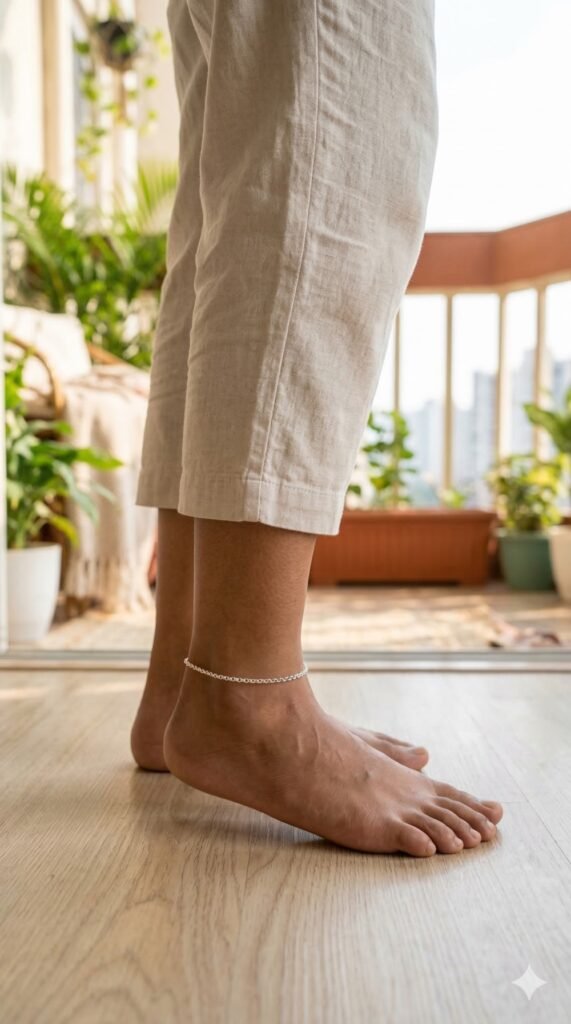
Silver sterling anklet worn on an Indian woman’s ankle, styled with minimal footwear, highlighting daily-wear jewellery in natural daylight

These marks may be tiny, especially on delicate anklets — you might need a magnifying glass or macro camera to see them clearly.

5.2 How you, as a buyer, can verify

Experts and BIS-inspired consumer guides recommend:

  • Look for “925” physically stamped somewhere on the anklet (clasp, plate, or inner side).
  • Check for the BIS logo + 925 + jeweller code — not just “silver” written in text.
  • Use the BIS Care app (Android/iOS) to:
    • Validate hallmark authenticity
    • Check the jeweller’s registration number
    • Report suspicious or fake hallmarks

For an online buyer, clear product photos and trust in the brand’s transparency about hallmarking matter more than ever.


6. Why Ross Jewells Uses Only 92.5 BIS Hallmarked Silver for Anklets

Ross Jewells is built on a simple promise: every silver jewellery piece, including anklets, is crafted from genuine 92.5 sterling silver and BIS hallmarked wherever applicable.
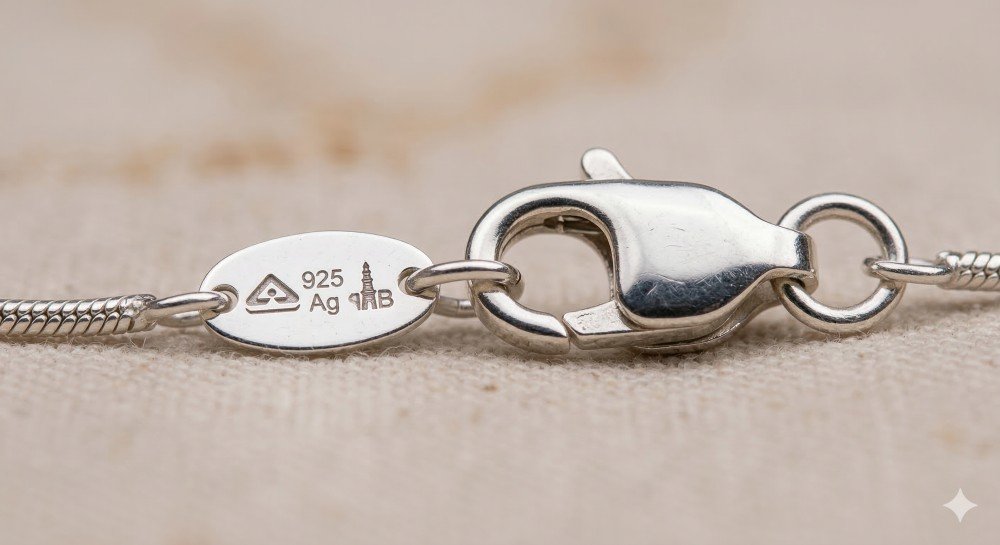
Macro shot of a silver anklet clasp with a tiny 925 purity stamp and hallmark visible on a small tag.

That means:

  • No mystery “white metal” or fake “German silver”
  • No low-purity 800 alloys that look dull and turn skin green faster
  • No confusing or hidden quality grades

6.1 Daily-wear design philosophy

Because Ross Jewells focuses on daily-wear and occasion-wear together, 92.5 silver is the only logical choice:

  • Strong enough for office, commute, and casual outings
  • Still lightweight and comfortable on the ankle
  • Stylish for both ethnic and Western outfits

6.2 Skin-friendly and long-term

While any copper-alloy silver can tarnish under certain conditions, 925 is widely considered safe for most skin types and is the global standard for quality silver jewellery.

With proper care (which Ross Jewells explains in its care instructions):

  • Your anklet remains bright and wearable for years
  • Any tarnish can be cleaned easily
  • You avoid the extreme bending issues of 999 and the excessive discolouration risk of 800

7. So Which Purity Should You Actually Buy for Daily-Wear Anklets in India?

Let’s answer the original buying-decision question directly.

7.1 999 Silver Anklets

  • Pros:
    • Very high purity (99.9%)
    • Beautiful bright colour
  • Cons:
    • Too soft — bends, dents, loses shape quickly
    • Not ideal for daily-wear anklets that face constant movement and contact
    • More suitable for coins, bars, idols than ankle jewellery

Verdict: Great for collectors and investment pieces, not practical for an everyday anklet in Indian conditions.

7.2 800 Silver Anklets

  • Pros:
    • Cheaper upfront
    • Harder than pure silver
  • Cons:
    • Lower purity (80%), more base metals
    • Higher risk of green/grey skin marks due to extra copper in sweat/humidity
    • Tarnishes and dulls faster than 925
    • Does not feel or look as premium long-term

Verdict: Works if you only care about price, but not ideal if you want premium, comfortable, long-lasting jewellery.

7.3 925 Silver Anklets (Sterling Silver)

  • Pros:
    • International standard for fine silver jewellery
    • High purity (92.5%) + added strength
    • Durable, holds shape well even in thin, elegant designs
    • Bright, attractive shine
    • Manageable tarnish with basic care
    • BIS hallmarking and “925” stamp give clear quality assurance
  • Cons:
    • Needs occasional cleaning and proper storage to maintain shine

Verdict: The best practical choice for daily-wear silver anklets in India.


7 Important FAQs About Silver Purity for Anklets

Is 999 silver better than 925 for anklets?

It’s purer, but not better for anklets. 999 silver is so soft that it bends, dents, and warps easily when worn on the ankle, which moves and hits surfaces all day. Jewellery experts consistently recommend 925 sterling silver for wearable jewellery because it balances purity with durability.

Why do most branded anklets say “925” and not “999”?

Because 925 is the global jewellery standard. It’s strong enough to hold intricate designs, clasps, and chains while still being mostly real silver. Established brands and educational guides explain that 999 is better for coins and idols, whereas 925 is made for wearable jewellery.

Does 925 silver turn the skin green or black?

Sometimes it can, especially in hot, humid climates when sweat, moisture, and sulphur in the air react with the small amount of copper in the alloy. This does not mean it’s fake; it’s a natural chemical reaction. Regular cleaning and keeping jewellery dry help minimise this.

Will 999 silver never tarnish?

Even 999 silver can tarnish over time, though generally slower than 925 because it has less copper. However, its extreme softness makes it impractical for something like anklets, which is why you don’t see serious anklet lines made in 999.

How do I know if my anklet is real 925 sterling silver?

“925” stamp on the piece
A proper BIS hallmark with logo, purity, assay centre code, and jeweller ID on Indian pieces
If in doubt, you can verify jeweller details using the BIS Care app.

Is 800 silver fake?

It’s still real silver, but at 80% purity instead of 92.5 or 99.9. The extra 20% alloy often means more copper, which can increase tarnish and skin discolouration, especially in anklets that touch sweat and dust constantly. It’s “real” but not premium.

What purity of silver anklet should I buy for daily wear in India?

For Indian weather, lifestyle, and usage, 925 sterling silver is the most sensible choice. It offers:
Enough purity to feel and look like real silver
Enough strength to survive daily wear
Recognised BIS hallmarking and easy verification
That’s why responsible brands like Ross Jewells stick to 92.5 silver for all their anklets and other jewellery.

Ready to Choose the Right Silver Anklet?

Now you know exactly what 999, 925, and 800 mean, how they behave in real life, and which purity is truly practical for Indian daily wear.

If you want an anklet that:

  • Looks premium and elegant
  • Survives real daily life (office, travel, streets, festivals)
  • Is made from genuine BIS hallmarked 92.5 sterling silver

then 925 is the purity you should actually buy, and that’s exactly what Ross Jewells offers in every design.

→ Explore Ross Jewells’ 92.5 Hallmarked Silver Anklets for Daily Wear and Gifting:
https://rossjewells.com/collections/anklets

Share This:
Back to Blogs

Why Ross?

The memory of these special moments must last forever with Ross.


Quality

Innovation

Value

Ethics

Free Shipping

Prepaid orders, above ₹999.00

Cash On Delivery

Order below ₹ 999.00

Secured Payment

EMI, Wallets, Cards and more

Questions? Mail us at hello@ross.com