Why Is My Silver Anklet Turning Black? 6 Real Reasons and Easy Fixes
You bought a beautiful silver anklet, wore it lovingly for a few weeks… and now it’s gone dark and dull. Maybe it even left a faint black or grey ring on your skin. It’s natural to panic and think, “Is this fake? Did I waste my money?”
The good news: in almost every case, blackening is a normal reaction of real silver, not a sign of fake metal or poor quality. Genuine silver reacts with tiny amounts of sulphur and moisture in the air and on your skin, forming a thin layer of silver sulphide that looks dark or black.
In this guide, we’ll break down:
6 real reasons why your silver anklet is turning black
At‑home cleaning methods that actually work
Prevention habits so your anklet stays shiny longer
4–5 must‑have FAQs that buyers keep asking
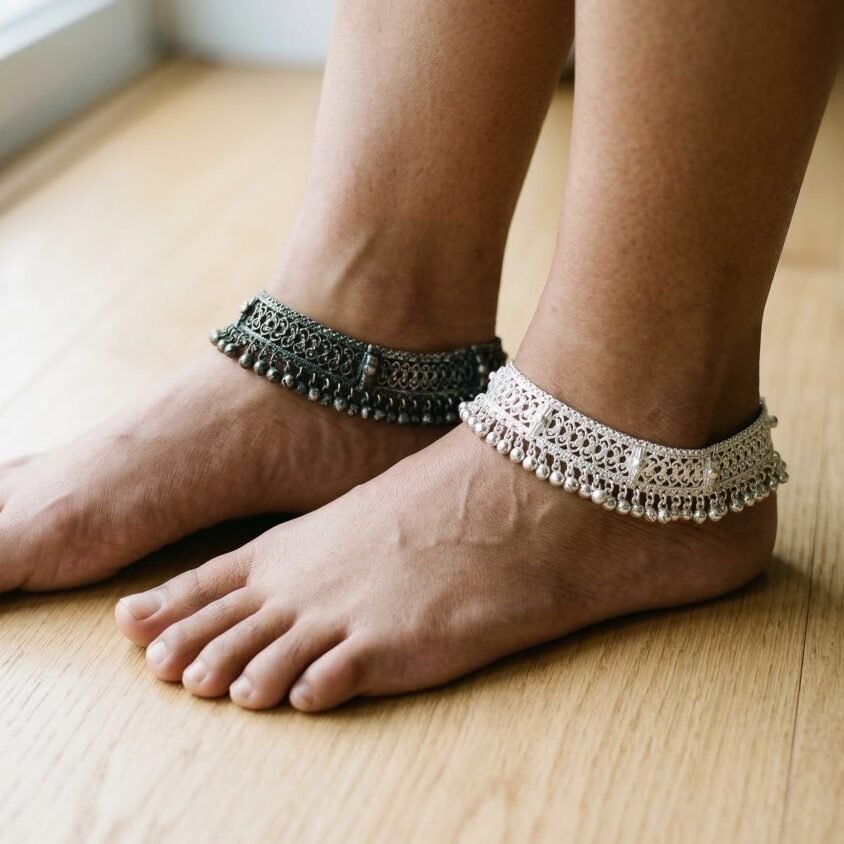
A close-up shot of a person’s feet and ankles resting on a light wooden floor in soft, natural daylight. They are wearing two intricately detailed silver anklets, demonstrating a clear visual contrast: the anklet on the left foot is tarnished and darkened, while the anklet on the right foot is freshly polished and bright silver.
1. The Science: Why Real Silver Turns Black
Silver itself is a reactive metal. When it meets sulphur compounds in the air and in everyday products, a slow chemical reaction takes place and forms silver sulphide on the surface. That’s the dark or black layer you’re seeing.
A few key points:
Tarnish = surface reaction, not deep damage to the metal.
Even the best 925 sterling silver will tarnish eventually.
High humidity, pollution, sweat and chemicals all speed up this process.
So if your anklet is turning black, it’s almost always a normal silver reaction, not a defect.
2. Reason #1 – Humidity, Sweat and India’s Climate
Anklets live on the sweatiest part of your body after underarms and neck: your feet and ankles. In India’s hot and humid weather, your skin constantly produces moisture and salts.
What happens then?
Sweat contains water, salts, acids and trace chemicals that react with the copper in sterling silver alloys.
High humidity in the air accelerates the reaction between silver and sulphur, creating black silver sulphide faster.
Coastal cities and monsoon seasons make anklets darken even quicker.
If you regularly walk in closed shoes or sandals where your feet sweat, you’ll notice blackening muchfaster on anklets than on rings or necklaces.
A close-up lifestyle shot of a person’s bare foot and lower leg standing on a wet stone path. The skin is dotted with small water droplets, and they are wearing an intricately detailed, slightly darkened silver anklet with small dangling bells. The background is a soft, hazy blur of lush green tropical plants, suggesting a humid monsoon environment.
3. Reason #2 – Polluted Air and Everyday SulphurSilver tarnish is strongly linked to sulphur and oxygen in the air.
Typical sources:
Urban air pollution, fumes, and industrial emissions
Gas stoves, certain foods (eggs, onions), rubber, wool and some packaging
Closed rooms with poor ventilation
All these environments contain small amounts of sulphur compounds that attach to your jewellery over time, especially when it’s stored in the open.
Anklets that sit near the floor can also catch more dust and pollutants, which accelerates darkening.
4. Reason #3 – Perfumes, Creams, Soaps and Cleaning Products
Many personal care and household products contain chemicals that react with silver:
Perfumes, deodorants, hair spray, body lotion and sunscreen
Harsh soaps, detergents and dishwashing liquids
Bleach and bathroom cleaners
Big jewellery brands and care guides specifically warn that cosmetics and cleaning agents speed up tarnish by exposing your silver to sulphur, chlorine and other reactive chemicals.
If you:
Spray perfume on your ankles
Apply body lotion then immediately wear your anklet
Clean floors or bathrooms without removing jewellery
…your anklet will blacken faster.
5. Reason #4 – Storage Habits That Invite Tarnish
How you store your silver anklet between wears matters as much as how you wear it.
Common mistakes include:
Keeping silver in open trays exposed to air and humidity
Leaving jewellery in the bathroom or near windows
Storing pieces piled together, where they rub and scratch
Care guides recommend:
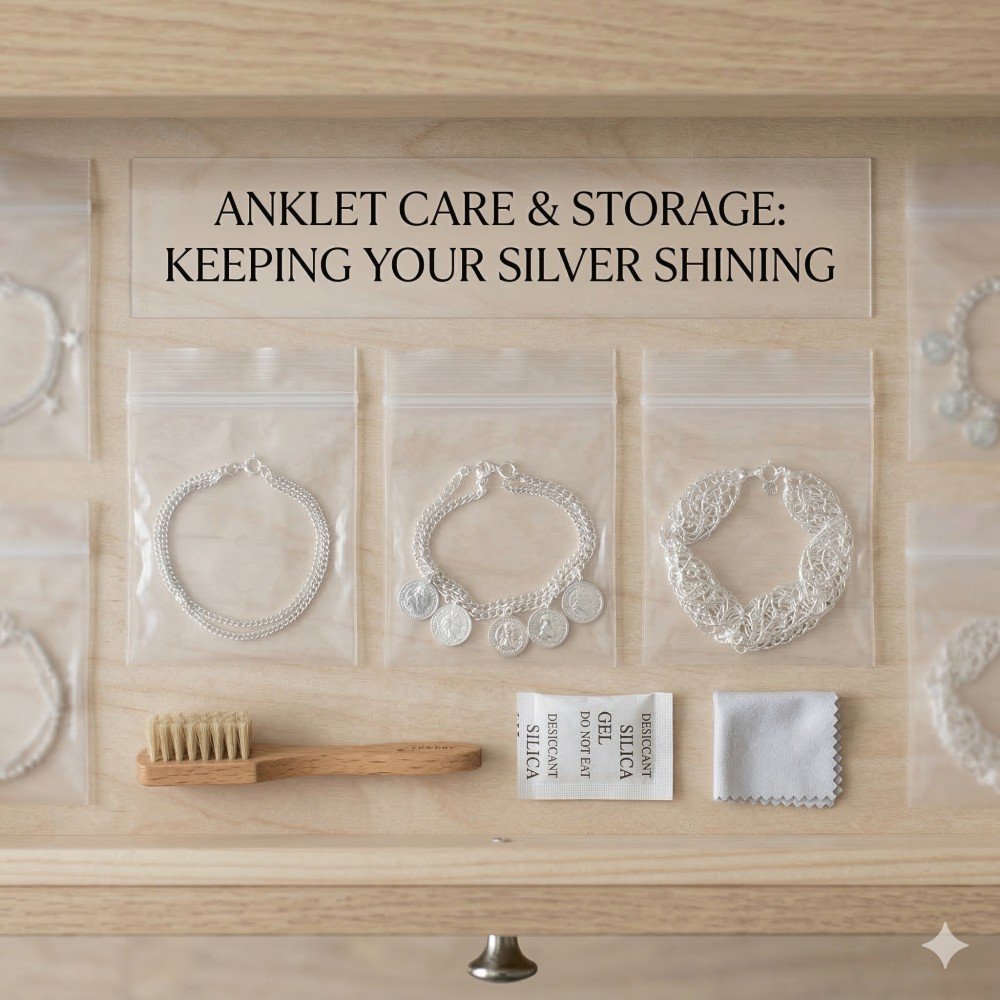
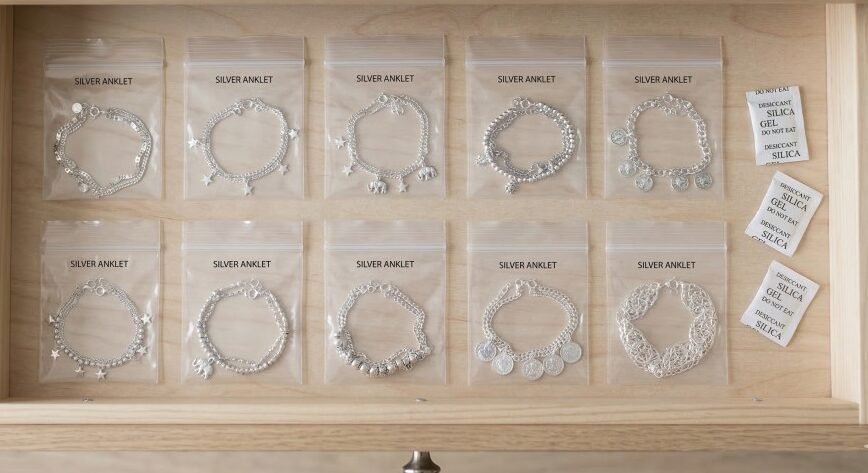
Airtight pouches or zip-lock bags
Anti-tarnish strips or silica gel packets
A cool, dry drawer — not the bathroom shelf
If your anklet has turned black while lying unused in a box, it likely reacted to moisture and polluted air trapped in that space.
6. Reason #5 – Your Unique Body Chemistry
Two people can buy the same anklet, yet one sees it darken in a month while the other keeps it shiny for a year. That’s because body chemistry varies.
Tarnish speed can be influenced by:
Skin pH — more acidic sweat accelerates reactions
Diet (spicy food, high sulphur foods, alcohol)
Medications and hormones that change body chemistry
High natural oil or sweat production
If most silver turns black quickly on you, it’s likely about your skin chemistry, not the brand.
7. Reason #6 – Low-Quality Alloys or Coatings
Not all “silver” is created equal. Some pieces:
Use a low-purity alloy with extra copper or base metals, which tarnish and discolour skin more aggressively.
Are only thinly plated over brass or other metals; once the coating wears off around anklets (which face friction), the underlying metal can react and turn both black and green.
Proper 925 sterling silver from reputable jewellers, preferably BIS hallmarked, gives you predictable, manageable tarnish instead of ugly corrosion.
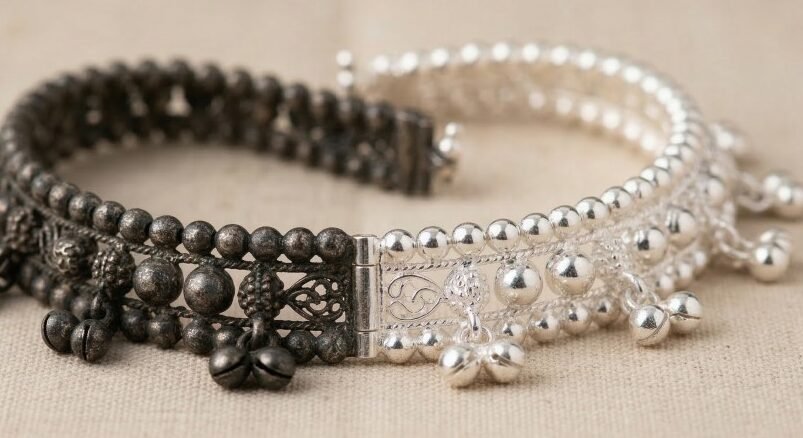
A macro photograph of a detailed, structured silver anklet resting on a light, textured fabric surface. The anklet is split exactly down the middle to show a stark contrast: the left half is dark, heavily tarnished, and matte, while the right half is bright, highly polished, and reflective. The jewelry features intricate beadwork, filigree patterns, and small dangling bells, with a shallow depth of field blurring the background.
8. Quick Fixes: How to Clean a Blackened Silver Anklet at Home
The good news: most tarnish is surface level and reversible. You can restore your anklet at home using safe DIY methods already recommended by jewellers and silver care experts.
Method 1 – Baking Soda + Aluminium Foil (Deep Clean)
Jewellery blogs and cleaning guides love this method because it reverses the chemical reaction instead of just scrubbing the surface.
You’ll need:
Heat-resistant glass or ceramic bowl
Aluminium foil
Baking soda
Optional: a pinch of salt
Boiling hot water
Soft microfibre cloth
Steps (short):
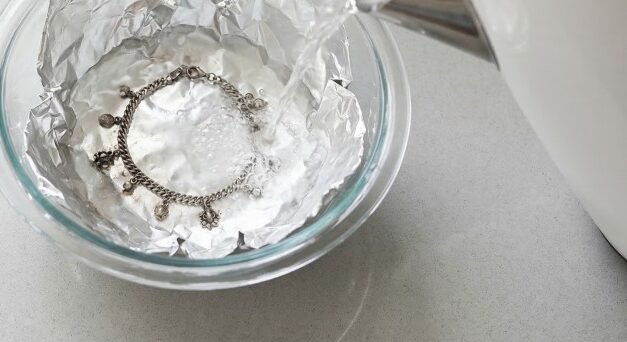
Line the bowl with aluminium foil, shiny side up.
Place your anklet flat on the foil.
Sprinkle 1–2 tablespoons of baking soda (and a bit of salt if you like).
Pour boiling water until the anklet is fully submerged.
Leave for 5–10 minutes. The tarnish (silver sulphide) transfers to the foil.
Carefully remove, rinse under clean water, and dry with a soft cloth.
This method uses ion exchange: the aluminium sacrifices itself so your silver gets its shine back.
Complete Cleaning Process
‘How to Clean a Tarnished Silver Anklet at Home’ with a minimal white background and teal and silver accents. It outlines six steps with simple corresponding icons: Step 1: Line a glass bowl with aluminum foil. Step 2: Place anklet on foil. Step 3: Add baking soda (and optional salt). Step 4: Pour boiling water. Step 5: Wait 5–10 minutes. Step 6: Rinse and dry with soft cloth.
Mix a few drops of mild dish soap in lukewarm water.
Soak the anklet for a few minutes.
Gently rub with your fingers or a very soft toothbrush.
Rinse thoroughly and pat dry with a soft cloth.
This won’t remove very heavy black tarnish but is excellent for regular maintenance.
Method 3 – Silver Polishing Cloth or Professional Cleaning
For delicate designs with stones or very heavy tarnish:
Use a silver polishing cloth designed for jewellery.
Or visit a professional jeweller for machine polishing or silver dip, as recommended by premium brands.
Avoid harsh home abrasives like rough toothpaste or scrubbing pads; they can scratch the metal surface permanently.
Cleaning Setup:
9. How to Stop Your Silver Anklet Turning Black So Quickly
You can’t stop tarnish forever, but you can slow it down a lot with simple habits. Care guides and major brands recommend variations of these tips.
9.1 Wear It the Smart Way
Put on your anklet after applying lotion, perfume or sunscreen.
Remove it before:
Intense workouts
Swimming (pool or sea)
Cleaning with chemicals
9.2 Store It Like a Pro
Use airtight pouches or zip bags instead of open trays.
Add silica gel or anti‑tarnish strips to absorb moisture.
Never store silver in the bathroom or kitchen.
9.3 Clean Little, Clean Often
Do a quick wipe with a soft dry cloth after a long, sweaty day.
Do a mild soap wash once in a while instead of waiting for deep black tarnish.
Over time, this becomes a tiny “silver care ritual” that keeps your anklet looking almost-new.
Storage & Care
Top-down view of a light wood drawer organizing ten silver anklets. Each is sealed in a small, clear zip-lock pouch. Three silica gel packets sit on the right side to prevent tarnishing.
10. FAQs – Silver Anklets Turning Black
Does a black anklet mean my silver is fake?
No. Real sterling silver (925) naturally forms a black layer of silver sulphide over time when it reacts with sulphur, moisture and air. In fact, never tarnishing at all can be a red flag that it might be steel, chrome or another non-silver metal.
Is sweat bad for sterling silver anklets?
Sweat itself doesn’t “ruin” silver, but the salts and acids in sweat react with the copper in sterling silver and speed up tarnish, especially in hot, humid climates. That’s why anklets and bracelets darken faster than earrings.
My anklet turned my skin black/grey. Is it dangerous?
The black or grey ring on your skin is usually just silver sulphide or copper compounds transferring from the jewellery surface to your skin. It’s not harmful for most people and washes off with soap. If you have metal allergies or irritation, stop wearing it and check with a dermatologist.
How often should I clean my silver anklet?
For daily wear in India, a good rhythm is: — Quick soft-cloth wipe whenever it looks dull — Mild soap clean every few weeks — Deep baking-soda + foil clean only when it’s heavily blackened Over‑cleaning with harsh abrasives can thin details and scratch the surface.
Will a 925 anklet always keep turning black no matter what I do?
All real silver will slowly tarnish, but with good storage, careful wear and regular light cleaning, you can stretch the shine for a very long time. Choosing high‑quality 925 sterling silver from reputable, BIS‑hallmarked brands also means you’re dealing with predictable, easy‑to-clean tarnish — not strange reactions from poor alloys.
If you combine these 6 reasons with the cleaning methods and prevention habits above, you won’t just fix a blackened anklet once — you’ll understand exactly how to keep every future silver piece looking bright, beautiful and ready for daily wear.